


Page 8 - hypertension_newsletter4_Final
P. 8
REFLECTIONS
                                                                                                                   Hypertension
     Hypertension Global Newsletter #4 2023


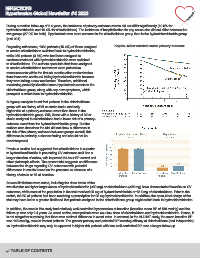
     During a median follow-up of 2.4 years, the incidence of primary-outcome events did not differ significantly (10.0% for
     hydrochlorothiazide and 10.4% for chlorthalidone). The incidence of hospitalization for any cause also did not differ between the   Hypertension
     two groups (27.0% for both). Hypokalemia was more common in the chlorthalidone group than in the hydrochlorothiazide group
     (p<0.001).

     Regarding adherence, 1039 patients (15.4%) of those assigned      Kaplan–Meier survival curve primary outcome
     to receive chlorthalidone switched back to hydrochlorothiazide,
     while 260 patients (3.8%) who had been assigned to
     continue treatment with hydrochlorothiazide were switched
     to chlorthalidone. The authors speculate that those assigned
     to receive chlorthalidone underwent more potassium
     measurements within the first six months after randomization
     than those who continued taking hydrochlorothiazide because
     they were taking a new medication. Therefore, additional
     monitoring probably identified more hypokalemic events in the
     chlorthalidone group, along with any new symptoms, which
     prompted a switch back to hydrochlorothiazide.

     Subgroup analysis found that patients in the chlorthalidone
     group with no history of MI or stroke had a modestly
     higher risk of a primary-outcome event than those in the
     hydrochlorothiazide group. Still, those with a history of MI or
     stroke assigned to chlorthalidone had a lower risk of a primary-
     outcome event than the hydrochlorothiazide group. But the
     authors note that since the trial did not show a difference in
     the risk of the primary outcome between groups overall, this
     difference is probably a chance finding and should not be
     overinterpreted.

     Previous studies had suggested that chlorthalidone is superior
     to hydrochlorothiazide in preventing CV outcomes as it has a
     longer duration of action, with improved 24-hour BP control and
     other pleiotropic effects. The present trial suggests no difference
     between the drugs regarding CV outcomes with potential
     differences in results based on the presence or absence of a
     history of stroke or MI at baseline.

     Several limitations were noted, including the dose levels of the
     two diuretics as higher target doses of hydrochlorothiazide (≥50 mg) or chlorthalidone (≥25 mg) have demonstrated benefits on CV
     outcomes, while most of the population in the trial received 25 mg of hydrochlorothiazide or 12.5 mg of chlorthalidone. Prior to the
     switch, 94.5% of patients had been receiving a prescription for 25 mg hydrochlorothiazide. In addition, the open-label design of the
     trial may have led to a greater likelihood that patients assigned to the chlorthalidone group might switch back to hydrochlorothiazide.

     In addition, the men in this study had relatively well-controlled hypertension at baseline (baseline mean BP of 139 mmHg) and the
     follow-up was only 2.4 years. As noted earlier, most patients were on a low dose of chlorthalidone and hydrochlorothiazide. Hence, it
     is not altogether surprising that there was minimal difference in event rates. In contrast, in the ALLHAT study, the mean baseline BP
     was 145 mmHg, even in treated patients. The greater potency and potential BP lowering efficacy of chlorthalidone (and indapamide)
     vs. hydrochlorothiazide may only be apparent in higher risk patients with less well-controlled BP over a longer follow-up.


          TABLE OF CONTENTS

